
Shadow, Shadow On The Wall: How Does It Appear To Us At All?

Once upon a time there lived, in an ancient land called Greece, a man named Plato. His many fine scripts appear now in classic books. Perhaps you have read or heard of, “The Allegory of the Cave.”
That is a story about a group of people who saw only shadows on a screen before them. They believed these shapes represented all of reality. This group of people lived in a cave, or, in modern times a very small, dark room.
They sat in chairs and faced one wall. They had formed a belief that something dreadful would happen if they turned their heads at all, especially to see the light on the other side of the shadows. They chose to be this way in order to support their conviction.
Behind them there was a transparent curtain hung in front of a window. This aperture allowed a view of the sidewalk, street, and park across the way. Whenever others would walk past the casement in the daylight the shadows of their bodies appeared on the wall. These bodies sometimes seemed to be holding objects, which in truth were bags or phones or other things.
Those shadows represented everything that existed to the people in chairs. They weren’t sure about the source of light, but their fear it might hurt them served to block a desire to look. As a pastime they gave names to each of the shadows and generated limited beliefs about them; they argued amongst themselves about each of their perceptions, which were all formed from observation of these misty-looking shadows.
Freedom
At length, one person decided to turn and look at the source. This one reasoned that doing so could not be more painful than their current situation had become. At first the light was too bright for their eyes, and they turned away, blinked, and rubbed, and then peeked again. Further discomfort ensued as this one began to notice that these objects on the other side of the veil looked strange, different, somewhat more precise compared to their shadows.
Nevertheless, they decided it might be more comfortable to turn back and face the wall. The lack of certainty and arguments with fellow chair persons was painful, but at least it was known and sure. This person almost chose to stay with the comfort of the known—but to ignore knowledge there was more was too painful.
Once they saw the light they couldn’t go on as if it didn’t exist. They decided to turn and look again. It took courage, and practice to adjust to this new way of being in the room.
Outside, past the veiled window, the sunlight seems overwhelming. At first their eyes can barely see anything. They turn back around to peer at the comfortable dark wall, and then again to look to the light; soon they begin to recognize the reflections on the wall for what they are: virtual shadows of something else. They see some other things were the source of these shadows. Finally, with practice, they see the sunlight itself.
Source
They begin to wonder about the source of all light and life. They start to realize that everything they once believed real was a projection. This realization didn’t make those in the chairs wrong; it only exposed a limited view of reality.
This one feels transformed, new, because they turned and looked. Their eyes, now used to daylight, find the darkness in the room unattractive. They try to tell the others about an expanded reality outside the cave, but all laugh or jeer at this one, and say,
“You looked and are now confused. See? Turning only makes you insane.” To the insane, sanity is insane.
The free one decides its not useful to try to change their heads around to look. They’d likely resist—maybe even get angry. It’s impossible to change their minds if they don’t want to do so, and therefore, “I’ll be content with the love I feel for them.”
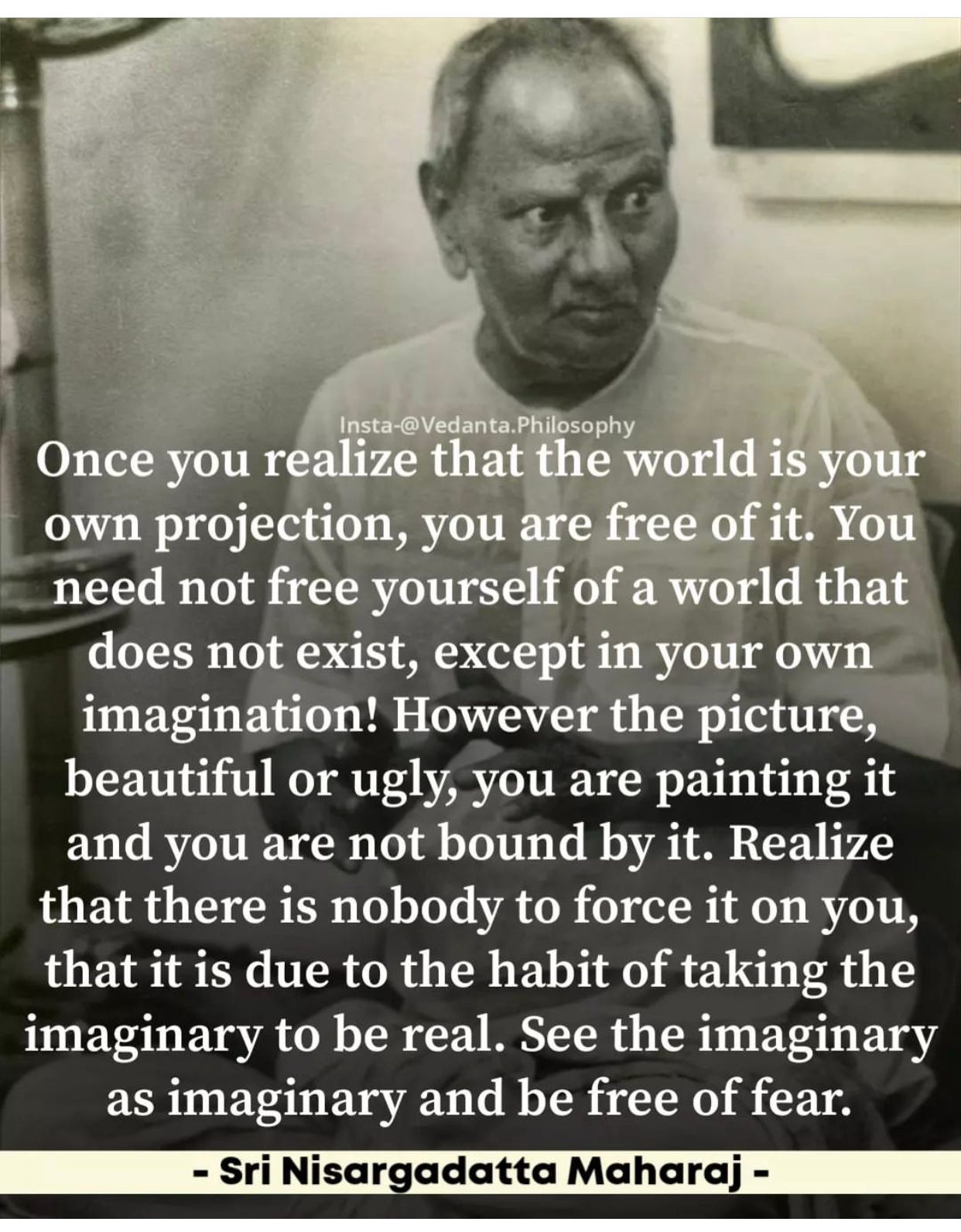
They pondered. “When you desire the limited comfort of shadows, the truth may not feel like freedom, and bliss can seem an unachievable dream. To dream of a separate existence alone is like being a drop of ocean spray that believes it isn’t part of the sea. The ego-mind nevertheless wants to be right about it’s small state and continue to see shadows. It doesn’t like the knowledge that its existence is a temporary one in a larger, eternal, ego-less consciousness.”
This one surmised: “Their own experience will eventually show those who won’t turn that it might be less painful to change. They might someday perceive that a human is more than they thought. They could understand that the unseen is unlimited, and their own imagination and desire will make them turn their heads and realize: I’m awake, forever, and there’s more!” ∆